
Blog
All-on-4 vs All-on-6: Which Full-Arch Option Is Better?
Compare implant count, bone requirements, and long-term planning criteria for full-mouth rehabilitation.
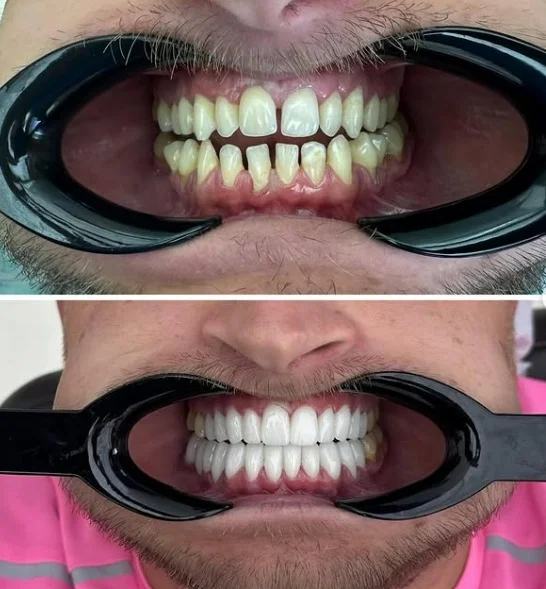
If you are missing most or all teeth in one jaw and researching full-arch solutions, you have almost certainly come across All-on-4 and All-on-6. Both deliver a fixed (non-removable) set of teeth anchored to dental implants — but the clinical reasoning behind each differs enough to change your treatment plan, cost, and long-term outcomes.
How All-on-4 Works
All-on-4 uses four implants per arch. Two are placed vertically in the front of the jaw where bone is typically denser, and two are angled at up to 45 degrees in the posterior region. This angulation lets the surgeon use existing bone and often avoid additional procedures like sinus lifts or bone grafts. A provisional fixed bridge is usually attached the same day or within 72 hours.
How All-on-6 Works
All-on-6 adds two more implants — usually in the premolar region — for a total of six anchor points per arch. The extra implants distribute biting force across a wider area, which can be beneficial when the patient has sufficient bone volume and the prosthetic design is longer or requires more posterior support.
Key Differences at a Glance
Implant count: 4 vs 6 per jaw. Bone requirement: All-on-4 needs less bone because angled implants bypass areas of atrophy; All-on-6 typically requires adequate posterior bone. Additional procedures: All-on-4 is designed to minimise grafting; All-on-6 may require sinus lift or bone augmentation if posterior bone is thin. Load distribution: Six implants share force across more points, which can reduce per-implant stress. Cost: All-on-6 generally costs more due to extra implants and surgery time. Same-day teeth: Both protocols can support immediate loading in suitable cases.
When Clinicians Recommend All-on-4
All-on-4 is often the preferred option when posterior bone volume is reduced, when a patient wants to avoid sinus lift surgery, or when a streamlined single-visit protocol is the priority. It has been studied for over two decades and long-term survival rates above 95% are consistently reported in the implant literature.
When Clinicians Recommend All-on-6
All-on-6 tends to be recommended when bone anatomy allows it comfortably — particularly in the lower jaw, which is usually denser. It provides extra mechanical support, which some prosthodontists prefer for patients with strong bite forces (such as bruxism) or when the opposing arch also has a fixed restoration.
What About Bone Quality and Sinus Lift?
In the upper jaw, the maxillary sinus limits how much vertical bone is available for implant placement. All-on-4's posterior implant angulation is specifically designed to work around this anatomy. If a surgeon recommends All-on-6 in the upper jaw and sinus bone is limited, a sinus lift procedure may be needed first — adding 4 to 6 months of healing before implants can be placed.
How to Decide
The choice is not about which option is universally 'better'. It depends on your jaw anatomy (assessed through CBCT scans), bite force pattern, esthetic goals, and budget. A responsible clinic will recommend the protocol that suits your clinical situation — not push the one with a higher price tag. At Cellavia Dental, we evaluate every case individually and present both options with transparent reasoning so you can decide with confidence.
Next Steps
If you are considering full-arch rehabilitation, the best starting point is a high-quality CBCT scan from your home country. Send it to our team for a free remote assessment, and we will let you know which approach fits your anatomy before you book any travel.
Related Treatment Pages
- All-on-4 Dental Implants- A fixed full-arch rehabilitation protocol using four strategically angled implants.
- All-on-6 Dental Implants- A full-arch protocol with six implants for broader load distribution.
- Sinus Lift for Upper Jaw Implants- A procedure that increases upper jaw bone height for safe posterior implant placement.
Price Intent Links
Related Price Guides
Use these row-level guides if you want the pricing logic behind the treatment families mentioned in this article.